
Unsure of when—or if—to go under the needle? Top skin experts weigh in on the dos and don’ts of this popular anti-wrinkle treatment.
Ready for Botox?
Olena-Yakobchuk/Shutterstock
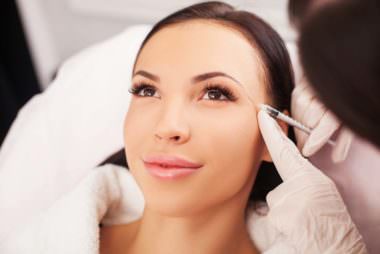
To get , or not to get Botox—that seems to be the question on the minds of women (and men) spanning from ages 25 to 65. Hailed as the most effective wrinkle treatment on the market today, Botox, or botulinum toxin, is just one of many FDA-approved brands that do the very same thing. “Botox is a brand name just like Kleenex or Xerox, which people associate with the actual product and use as a general term,” says David Shafer, MD, board-certified plastic surgeon and RealSelf contributor. “All of the products work very similarly, but differ in their molecular configurations and manufacturing.” Dysport® and Xeomin are two other brand names for the injectable anti-wrinkle treatment, which seems to be skewing towards a younger audience by the minute. In fact, according to the American Society of Plastic Surgeons, more than 7 million Botox procedures were performed in 2016 alone, and over 126,500 of them were on adults under the age of 29. So if age isn’t always a determinable factor to help in your decision to get Botox, what is? We turned to the nation’s top skin-care professionals for signs that you may or may not be ready for Botox.
You’re ready if: you start noticing deep-set wrinkles and skin thinning
Africa-Studio/Shutterstock
For most people, this happens in their late 30s or early 40s, and can be determined when fine lines start appearing in unwanted places. “Botox freshens up the face and temporarily reduces the appearance of lines, like glabella ‘elevens’ (the parallel furrow between your brow). You can start once you notice the angry look or the fine lines appearing,” says Tsippora Shainhouse, MD, Beverly Hills-based dermatologist. “It’s best to do the procedure around the time these lines begin to appear, however, because once you have deep-set wrinkles and your skin is significantly thinner (50+ years), neurotoxins alone are not sufficient.”
You’re not ready if: you have a heavy brow
Sruilk/Shutterstock
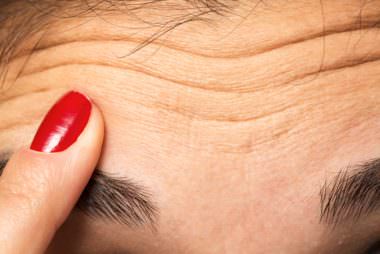
Especially older patients who have and a great deal of wrinkling in their forehead should be careful about using Botox. “These older patients often need their brows lifted in order to help assist their eyelid to open properly, so when Botox is used, their lids get heavy sometimes to the point where their eyelids close involuntarily,” says Dr. Brandow. “Some patients who are treated with Botox around their eyes will often times get a cheeky smile where their cheeks get too puffy and come up too much giving them a weird look to their face.” This is one of the reasons why it is so important to be carefully examined by a licensed professional before using Botox in any form.
You’re ready if: you see deep wrinkles when you make facial expressions
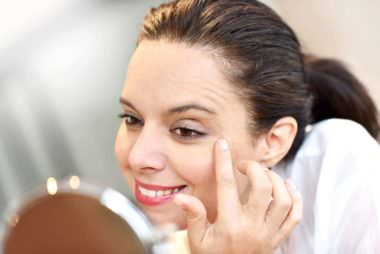
Goodluz/Shutterstock
Known as dynamic rhytids, these wrinkles disappear when you’re no longer making any facial expressions. One you have static rhytids, or wrinkles that remain on your face once you are no longer making facial expressions, it can be difficult to treat the fine lines. “In these cases, Botox may not be sufficient to completely erase the wrinkles” says Dr. Shainhouse. “However, Botox can still reduce the depth of the static wrinkles and prevent them from becoming deeper and more ‘etched in’, by minimizing muscle contraction in the treated area(s).”
Frequently Asked Questions
Botox is a brand name for botulinum toxin, an FDA-approved injectable treatment that temporarily reduces the appearance of wrinkles by relaxing facial muscles. It works by blocking nerve signals to the muscles, preventing them from contracting and causing wrinkles.
While Botox is popular among a wide age range, many people start considering it in their late 30s to early 40s when fine lines and deep-set wrinkles begin to appear. However, some younger adults in their 20s also opt for Botox as a preventative measure against wrinkles.
You may be ready for Botox if you notice the appearance of fine lines, deep-set wrinkles, or dynamic wrinkles that show up when making facial expressions. Early treatment can help reduce these lines and prevent them from becoming more pronounced.
If you have a heavy brow or significant forehead wrinkling, especially as an older patient, Botox might not be suitable. It can cause eyelid heaviness or drooping, and in some cases, lead to unnatural facial expressions. A professional evaluation is essential before treatment.
Dynamic rhytids are wrinkles that appear only when making facial expressions and disappear at rest. Botox effectively reduces these wrinkles by relaxing the muscles responsible for their formation, preventing them from deepening over time.
Static wrinkles remain visible even when the face is at rest. Botox may not completely erase these wrinkles but can reduce their depth and prevent them from worsening by minimizing muscle contractions in the treated areas.
Yes, besides Botox, other FDA-approved brands like Dysport® and Xeomin offer similar anti-wrinkle treatments. They work similarly but differ slightly in molecular structure and manufacturing processes.
A licensed professional can assess your facial structure, skin condition, and muscle activity to determine if Botox is appropriate for you. This helps avoid side effects like eyelid drooping or unnatural facial expressions and ensures safe, effective treatment.


