
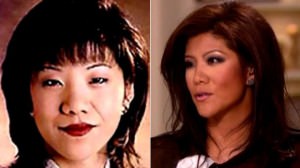
Julie Chen has been one of America’s favorite news anchors and personalities had been hiding a secret for nearly 20 years. Though she may be a household name today, back when she was 25 years old, Chen was starting her career as a local news reporter in Dayton, Ohio. But while she was eager to move up in her career, she came across several road blocks, most shocking of all, her Chinese heritage.
Chen was told by her boss and an agent that she would never make it as a top news reporter in Dayton because of the fact that she was Chinese and had the characteristic Asian eyes, which feature an epicanthic fold covering the inner angle of the eyes. Though proud of her heritage, Chen began to worry about being Asian in a predominantly white community and admits she made a decision that changed her life – she underwent blepharoplasty surgery to remove the fold and look more “American.”
Chen opened up about her plastic surgery past on a Sept. 11 episode of “The Talk,” in which she emotionally discussed the many obstacles she faced in her career in Dayton.
Chen recalls turning to her director at the time and asking if she could fill in for anchors who were away on vacation, thinking she would get a positive response. Unfortunately, what she got was a huge dose of racism.
According to Chen, her boss told her that she “will never be on this anchor desk, because you’re Chinese.”
“He said, ‘Let’s face it, Julie, how relatable are you to our community? How big of an Asian community do we really have in Dayton? … On top of that because of your heritage, because of your Asian eyes, I’ve noticed that when you’re on camera, when you’re interviewing someone, you look disinterested and bored because your eyes are so heavy, they are so small,’” recounted Chen on the talk show.
Her director’s comments made Chen feel “very insecure” at the time and affected her ability to work.
Feeling discouraged, she tried seeking employment elsewhere and turned to an agent for help, whom she discovered was equally cynical and racist.
“I cannot represent you unless you get plastic surgery to make your eyes look bigger,” the agent told Chen.
At which point, Chen felt she had no other choice than to undergo the eye surgery to look more Western. She eventually caved and had the blepharoplasty procedure, after which Chen admits a greater number of career opportunities opened up for her.
Though she says she had no regrets, Chen often wonders if she didn’t give into the pressures of society to look a certain way. She’s not the only member of the Asian community who has undergone eye-lid surgery though. Statistics show that South Koreans lead the way with the highest rate of plastic surgery procedures in the world, the most popular of which is double blepharoplasty surgery.
Unfortunately, many people turn to plastic surgery for all the wrong reasons. Though treatments like blepharoplasty, rhinoplasty and liposuction can all improve an individual’s self confidence and self esteem, New York plastic surgeon, Dr. David Shafer, stresses the importance of getting plastic surgery to satisfy one’s own goals, not anyone else’s.
Frequently Asked Questions
Julie Chen is a well-known American news anchor and television personality who revealed that she underwent plastic surgery nearly 20 years ago to alter her Asian eyes. She shared that this decision was influenced by racial biases she faced early in her career as a local news reporter in Dayton, Ohio.
Julie Chen decided to have blepharoplasty surgery after her boss and an agent told her she would not succeed as a top news reporter because of her Chinese heritage and the appearance of her eyes. They suggested that her 'Asian eyes' made her look disinterested on camera and less relatable to the predominantly white community she worked in.
Blepharoplasty is a type of eyelid surgery that can remove or alter the epicanthic fold, which is common in Asian eyes. It is popular in some Asian communities, especially in South Korea, where double eyelid surgery is the most common plastic surgery procedure, often sought to achieve a more Westernized eye appearance.
Julie Chen described feeling very insecure after her director told her she would never be on the anchor desk because of her Chinese heritage and the appearance of her eyes. These comments negatively affected her confidence and ability to work effectively at the time.
Julie Chen stated that she has no regrets about having the blepharoplasty surgery because it opened up more career opportunities for her. However, she often reflects on whether she gave in to societal pressures to look a certain way.
Racism played a significant role in Julie Chen's early career challenges, as she was explicitly told by her boss and agent that her Chinese heritage and eye appearance would prevent her from advancing as a news anchor. This discrimination influenced her decision to undergo plastic surgery.
Dr. David Shafer emphasizes that plastic surgery should be pursued to satisfy one's own personal goals and desires, rather than to meet societal pressures or the expectations of others. This approach helps ensure that patients have a healthy mindset about their procedures.
Plastic surgery is very common in South Korea, which has the highest rate of plastic surgery procedures in the world. The most popular procedure among South Koreans is double blepharoplasty, a surgery that creates a crease in the eyelid to make the eyes appear larger.
When Julie Chen sought representation from an agent, she was told that she could not be represented unless she underwent plastic surgery to make her eyes look bigger. This reflected the racial biases and appearance standards prevalent in the industry at the time.
The epicanthic fold is a skin fold of the upper eyelid that covers the inner corner of the eye, commonly found in people of East Asian descent. It is a distinctive feature of Asian eyes and was a focus in Julie Chen's decision to have blepharoplasty surgery.


