
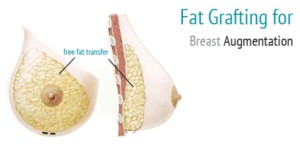
Recent studies show that techniques for breast augmentation surgeries are evolving. A survey found in the latest issue of Plastic and Reconstructive Surgery®, the American Society of Plastic Surgeons (ASPS) medical journal, reveals that 70% of plastic surgeons in the United State have used fat grafting techniques for breast enhancement but most believe the treatment is better suited for breast reconstruction.
Fat grafting for breast enhancement involves taking unwanted fat from another area of the body, such as the thighs or abdomen, purifying it and then transferring it into the breasts to increase their size or improve their shape. The technique has become increasingly popular over the years as more patients are opting for natural, minimally invasive treatments and what could be more natural than using the patient’s own fat?
With this treatment, patients do not have to worry about their bodies rejecting the implants or fear their implants rupturing. The tough choice of silicone or saline is also tossed out because many patients would prefer to stick to their own natural fat for augmentation purposes.
But when it comes down to actual plastic surgeon preference, different doctors have different ideas on what’s best for patients. Each type of breast implant (silicone or saline) brings its own pros and cons. Silicone implants are known for their aesthetically superior quality while saline implants offer more flexibility in size and shape. Choosing a breast implant is a very personal decision that should not be made quickly. Several factors must be taken into account, including the patient’s age, desired cup size and aesthetic goals.
Of the 456 ASPS Member Surgeons questioned in the survey, 70% explained they have used fat grafting techniques for breast augmentation. The survey also found that 88% of plastic surgeons who are currently offering fat grafting treatments for the breasts utilize this method for breast reconstruction as opposed to general augmentation alone.
The surgeons surveyed explained fat grafting is a great technique for improving the overall shape of the breast and usually employ this treatment during reconstruction surgeries, such as after lumpectomy surgeries for early-stage breast cancer patients or following mastectomy surgeries.
Furthermore, the study found that 75% of the surgeons performing fat grafting breast surgeries prefer to obtain the fat for the procedure from the abdomen.
Despite original concerns over fat grafting as a viable breast augmentation or reconstruction alternative, over the years, this method has become increasingly popular. In fact, nearly 90 percent of surgeons in the United States use fat grafting for breast reconstruction and a smaller percentage also use the method for breast enhancement.
Still, prospective breast augmentation and breast reconstruction patients should always research all the various treatments on their own before deciding on one specific method. Some patients may come into a plastic surgery consultation with a preconceived notion of which type of implant would be better, when in reality, another method might be better suited to their body and breast type as well as for their overall health and cosmetic goals.
Dr. David Shafer has performed countless breast augmentation and reconstruction treatments using various methods and always thoroughly examines patients in order to offer the best advice as far as implant filling and position. If you have considered undergoing a cosmetic or reconstructive breast procedure in New York, consult with Dr. Shafer to determine the method that is ideal for you in order to achieve optimal and beautiful results.
Frequently Asked Questions
Fat grafting for breast enhancement involves harvesting fat from one part of the patient's body, such as the abdomen or thighs, purifying it, and then injecting it into the breasts to increase size or improve shape. This technique uses the patient's own natural fat, making it a minimally invasive and natural alternative to traditional implants.
According to a survey by the American Society of Plastic Surgeons, 70% of plastic surgeons in the U.S. have used fat grafting techniques for breast augmentation. Additionally, nearly 90% of surgeons use fat grafting primarily for breast reconstruction purposes.
Fat grafting avoids risks associated with implants such as rejection or rupture. It uses the patient's own fat, eliminating concerns about implant materials. Unlike silicone or saline implants, fat grafting offers a more natural feel and appearance and is minimally invasive.
Fat grafting is most commonly used during breast reconstruction surgeries, especially after lumpectomy or mastectomy procedures for breast cancer patients. It helps improve breast shape and volume in reconstructive contexts more than for general cosmetic augmentation.
The abdomen is the preferred donor site for fat harvesting in fat grafting breast procedures, with 75% of surgeons choosing this area. Other common areas include the thighs and flanks, depending on the patient's body and available fat.
Patients should consider their age, desired breast size, aesthetic goals, and overall health. They should also evaluate the pros and cons of silicone versus saline implants and whether a natural fat transfer might better suit their body type and reconstruction needs.
Fat grafting may not be ideal for everyone. While it is excellent for natural enhancement and reconstruction, some patients may require traditional implants to achieve their desired size or shape. A thorough consultation with a plastic surgeon is essential to determine the best method.
Silicone implants are known for their superior aesthetic quality, offering a more natural look and feel. Saline implants provide more flexibility in size and shape but may feel less natural. The choice depends on patient preference and surgical goals.
Surgeons often prefer fat grafting for reconstruction because it helps restore breast shape and volume after cancer surgeries without introducing foreign materials. For general augmentation, implants may better achieve larger size increases or specific aesthetic goals.
Initially, there were concerns about fat grafting's viability for breast augmentation and reconstruction. However, over time, it has gained popularity and acceptance, with nearly 90% of U.S. surgeons now using it for reconstruction and many for augmentation as well.
Patients should thoroughly research all available treatment options and consult with experienced plastic surgeons. Understanding the benefits and limitations of each method, including fat grafting and implants, helps ensure the chosen procedure aligns with their health and aesthetic goals.


